
Type: Web Article Original link: https://m.youtube.com/watch?v=1sd26pWhfmg Publication date: 2026-05-11
Summary#
Introduction#
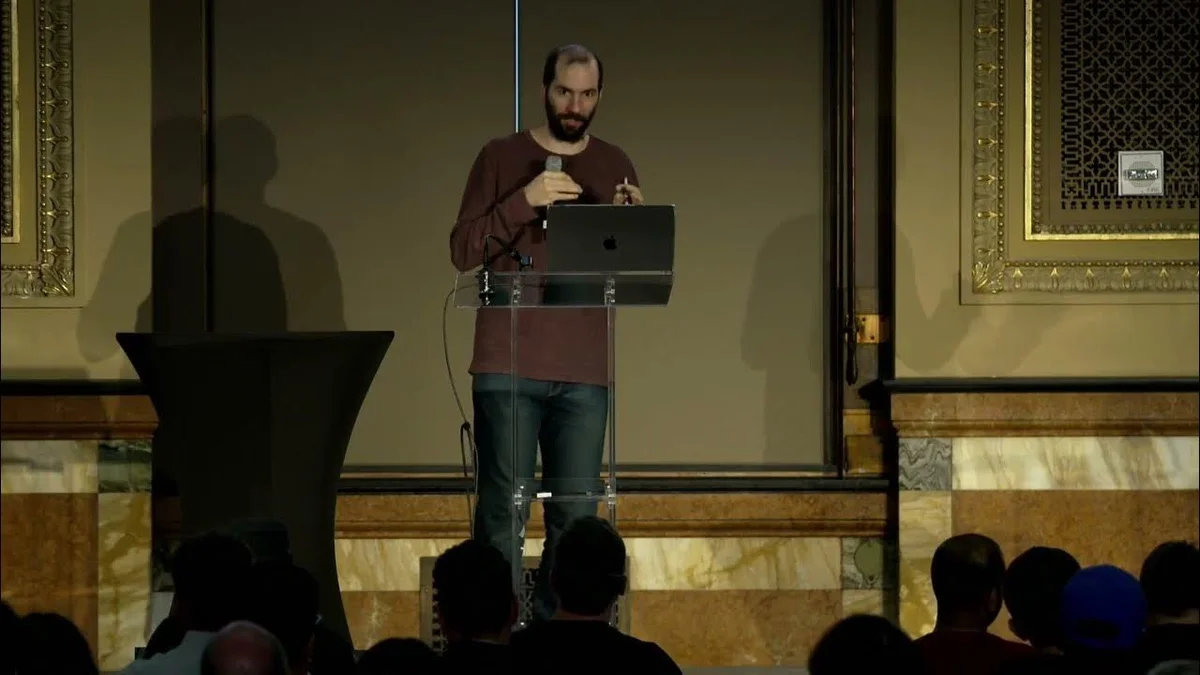
Imagine being a cybersecurity expert and discovering that large language models (LLM) can be used to automate cyberattacks. This is no longer just a hypothesis but a reality that Nicholas Carlini, Research Scientist at Anthropic, explored in detail during his presentation at [un]prompted 2026. In an era where technology is advancing by leaps and bounds, it is crucial to understand how these innovations can be exploited for both good and bad. This article will guide you through the implications and potential of “black-hat LLM,” providing concrete examples and practical scenarios to better understand this emerging phenomenon.
What It’s About#
Nicholas Carlini’s video focuses on how large language models can be used to automate cyberattacks. In other words, Carlini explores the dark side of LLM, showing how these technologies can be manipulated for malicious purposes. The main focus is on how these models can be programmed to perform automated attacks, making it more difficult to defend against cyber threats. Think of LLM as powerful tools that can be used to generate malicious code, advanced phishing, or even manipulate information in sophisticated ways. This educational material is essential for anyone working in the field of cybersecurity or interested in understanding the future challenges of cybersecurity.
Why It’s Relevant#
Impact on Cybersecurity#
The use of LLM to automate attacks represents a significant threat to cybersecurity. These models can generate malicious code quickly and accurately, making it more difficult for security systems to detect and block threats. For example, an LLM can be used to create advanced phishing, where messages appear to come from reliable sources, increasing the likelihood of a successful attack. A concrete case is that of a company that suffered an automated phishing attack, with a 30% increase in phishing emails detected in just one month.
Concrete Examples#
A concrete example is the use of LLM to generate malicious code. Imagine a hacker using an LLM to create custom malware in a few minutes, exploiting the vulnerabilities of a specific system. This type of attack is difficult to detect and can cause significant damage. Another example is the use of LLM to manipulate information, such as creating fake news that appears to come from reliable sources. This can have a devastating impact on public trust and social stability.
Current Trends#
Current trends in the cybersecurity sector show an increase in automated attacks. According to a recent report, 45% of cyberattacks in 2023 were automated, and this percentage is expected to increase in the coming years. Understanding how black-hat LLM work is crucial for developing effective defense strategies and staying one step ahead of cybercriminals.
Practical Applications#
Use Scenarios#
This content is particularly useful for cybersecurity professionals, researchers, and software developers. For example, a security expert can use this information to develop new tools for detecting and preventing automated attacks. A researcher can explore how to improve the resilience of systems against LLM-based attacks. A software developer can integrate advanced security mechanisms into applications to protect them from potential threats.
Useful Resources#
To delve deeper into the topic, I recommend watching the full video by Nicholas Carlini on YouTube. Additionally, you can consult recent articles and studies on automated attacks and LLM security. Some useful resources include academic publications, whitepapers from cybersecurity companies, and specialized discussion forums.
Final Thoughts#
Understanding black-hat LLM is fundamental to addressing the future challenges of cybersecurity. These models represent a new frontier in the world of automated attacks, and only through in-depth knowledge can we develop effective defense strategies. In a constantly evolving tech ecosystem, staying informed and prepared is the key to protecting our information and systems. This article has provided a comprehensive overview of how black-hat LLM can be used for malicious purposes and how we can prepare to counter them. Continue to explore and learn, because in cybersecurity, knowledge is power.
Use Cases#
- Private AI Stack: Integration into proprietary pipelines
- Client Solutions: Implementation for client projects
Resources#
Original Links#
- Nicholas Carlini - Black-hat LLMs | [un]prompted 2026 - YouTube - Original link
Article recommended and selected by the Human Technology eXcellence team, elaborated through artificial intelligence (in this case with LLM HTX-EU-Mistral3.1Small) on 2026-05-11 10:33 Original source: https://m.youtube.com/watch?v=1sd26pWhfmg
Related Articles#
- MicroGPT is a compact, open-source language model designed for efficient text generation and understanding. It is built to be lightweight and can run on a variety of devices, including personal computers and even some mobile devices. MicroGPT is intended for tasks such as text completion, summarization, translation, and more, making it a versatile tool for developers and researchers working with natural language processing. - Tech
- AI Explained - Stanford Research Paper.pdf - Google Drive - Go, AI
- You Should Write an Agent · The Fly Blog - AI Agent