
Large language models are proficient in solving and creating emotional intelligence tests | Communications Psychology

·400 words·2 mins
Articoli AI LLM Foundation Model
Articoli Interessanti - This article is part of a series.
Part : Everything as Code: How We Manage Our Company In One Monorepo At Kasava, we've embraced the concept of "everything as code" to streamline our operations and ensure consistency across our projects. This approach allows us to manage our entire company within a single monorepo, providing a unified source of truth for all our configurations, infrastructure, and applications. **Why a Monorepo?** A monorepo offers several advantages: 1. **Unified Configuration**: All our settings, from development environments to production, are stored in one place. This makes it easier to maintain consistency and reduces the risk of configuration drift. 2. **Simplified Dependency Management**: With all our code in one repository, managing dependencies becomes more straightforward. We can easily track which versions of libraries and tools are being used across different projects. 3. **Enhanced Collaboration**: A single repository fosters better collaboration among team members. Everyone has access to the same codebase, making it easier to share knowledge and work together on projects. 4. **Consistent Build and Deployment Processes**: By standardizing our build and deployment processes, we ensure that all our applications follow the same best practices. This leads to more reliable and predictable deployments. **Our Monorepo Structure** Our monorepo is organized into several key directories: - **/config**: Contains all configuration files for various environments, including development, staging, and production. - **/infrastructure**: Houses the infrastructure as code (IaC) scripts for provisioning and managing our cloud resources. - **/apps**: Includes all our applications, both internal tools and customer-facing products. - **/lib**: Stores reusable libraries and modules that can be shared across different projects. - **/scripts**: Contains utility scripts for automating various tasks, such as data migrations and backups. **Tools and Technologies** To manage our monorepo effectively, we use a combination of tools and technologies: - **Version Control**: Git is our primary version control system, and we use GitHub for hosting our repositories. - **Continuous Integration/Continuous Deployment (CI/CD)**: We employ Jenkins for automating our build, test, and deployment processes. - **Infrastructure as Code (IaC)**: Terraform is our tool of choice for managing cloud infrastructure. - **Configuration Management**: Ansible is used for configuring and managing our servers and applications. - **Monitoring and Logging**: We use Prometheus and Grafana for monitoring,
Part : This Article
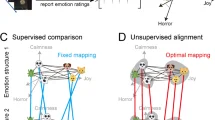
Image related to large language models emotional intelligence tests
#### Source

Type: Web Article Original Link: https://www.nature.com/articles/s44271-025-00258-x Publication Date: 2024-10-03


Summary
#

WHAT - This article from Communications Psychology examines the ability of Large Language Models (LLMs) to solve and create emotional intelligence tests, demonstrating that models like ChatGPT-4 outperform humans in standardized tests.

WHY - It is relevant for the AI business because it highlights the potential of LLMs in improving emotional intelligence in AI applications, offering new opportunities to develop more effective evaluation and emotional interaction tools.

WHO - Key players include researchers in the field of communication psychology, LLM developers such as OpenAI (ChatGPT), Google (Gemini), Microsoft (Copilot), Anthropic (Claude), and DeepSeek.

WHERE - It positions itself in the market of AI applied to psychology and emotional skills assessment, integrating with advanced artificial intelligence technologies.

WHEN - The trend is current, with results published in 2024, indicating growing maturity and increasing interest in the application of LLMs in psychological and emotional intelligence fields.

BUSINESS IMPACT:

  • Opportunities: Development of new AI-based emotional assessment tools, improvement of human-machine interactions in areas such as psychological support and human resource management.
  • Risks: Competition with other companies developing similar technologies, need for investments in research and development to maintain technological leadership.
  • Integration: Possible integration with existing emotional assessment and support platforms, improving the accuracy and effectiveness of current solutions.

TECHNICAL SUMMARY:

  • Core technology stack: LLMs based on machine learning and neural networks, with programming languages such as Python and Go.
  • Scalability: High scalability thanks to the ability of LLMs to process large volumes of data and be implemented on cloud infrastructures.
  • Technical differentiators: Superior precision in solving and generating emotional intelligence tests, ability to generate new test items with psychometric properties similar to the originals.

Use Cases
#

  • Private AI Stack: Integration into proprietary pipelines
  • Client Solutions: Implementation for client projects
  • Strategic Intelligence: Input for technological roadmaps
  • Competitive Analysis: Monitoring AI ecosystem

Resources
#

Original Links #


Article recommended and selected by the Human Technology eXcellence team, elaborated through artificial intelligence (in this case with LLM HTX-EU-Mistral3.1Small) on 2025-09-06 10:48 Original source: https://www.nature.com/articles/s44271-025-00258-x

Related Articles #

Articoli Interessanti - This article is part of a series.
Part : Everything as Code: How We Manage Our Company In One Monorepo At Kasava, we've embraced the concept of "everything as code" to streamline our operations and ensure consistency across our projects. This approach allows us to manage our entire company within a single monorepo, providing a unified source of truth for all our configurations, infrastructure, and applications. **Why a Monorepo?** A monorepo offers several advantages: 1. **Unified Configuration**: All our settings, from development environments to production, are stored in one place. This makes it easier to maintain consistency and reduces the risk of configuration drift. 2. **Simplified Dependency Management**: With all our code in one repository, managing dependencies becomes more straightforward. We can easily track which versions of libraries and tools are being used across different projects. 3. **Enhanced Collaboration**: A single repository fosters better collaboration among team members. Everyone has access to the same codebase, making it easier to share knowledge and work together on projects. 4. **Consistent Build and Deployment Processes**: By standardizing our build and deployment processes, we ensure that all our applications follow the same best practices. This leads to more reliable and predictable deployments. **Our Monorepo Structure** Our monorepo is organized into several key directories: - **/config**: Contains all configuration files for various environments, including development, staging, and production. - **/infrastructure**: Houses the infrastructure as code (IaC) scripts for provisioning and managing our cloud resources. - **/apps**: Includes all our applications, both internal tools and customer-facing products. - **/lib**: Stores reusable libraries and modules that can be shared across different projects. - **/scripts**: Contains utility scripts for automating various tasks, such as data migrations and backups. **Tools and Technologies** To manage our monorepo effectively, we use a combination of tools and technologies: - **Version Control**: Git is our primary version control system, and we use GitHub for hosting our repositories. - **Continuous Integration/Continuous Deployment (CI/CD)**: We employ Jenkins for automating our build, test, and deployment processes. - **Infrastructure as Code (IaC)**: Terraform is our tool of choice for managing cloud infrastructure. - **Configuration Management**: Ansible is used for configuring and managing our servers and applications. - **Monitoring and Logging**: We use Prometheus and Grafana for monitoring,
Part : This Article